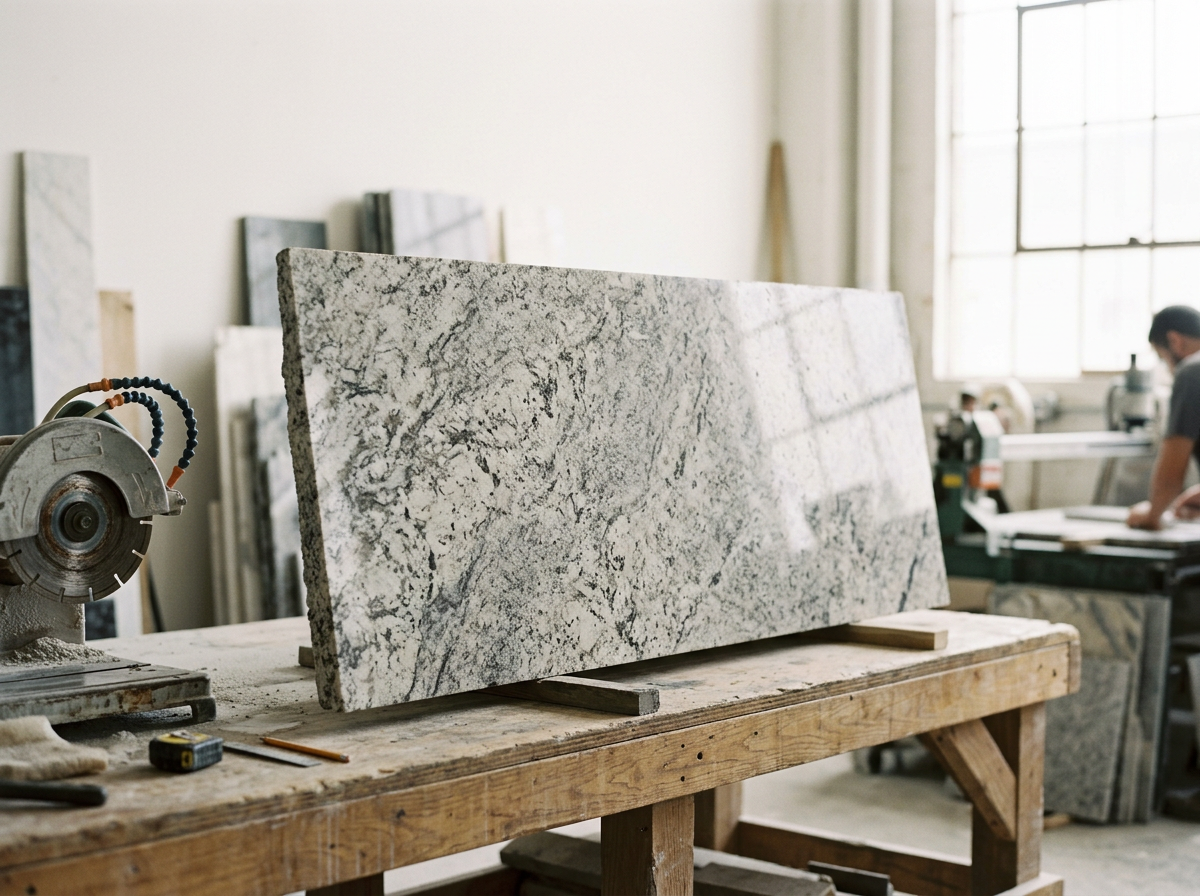
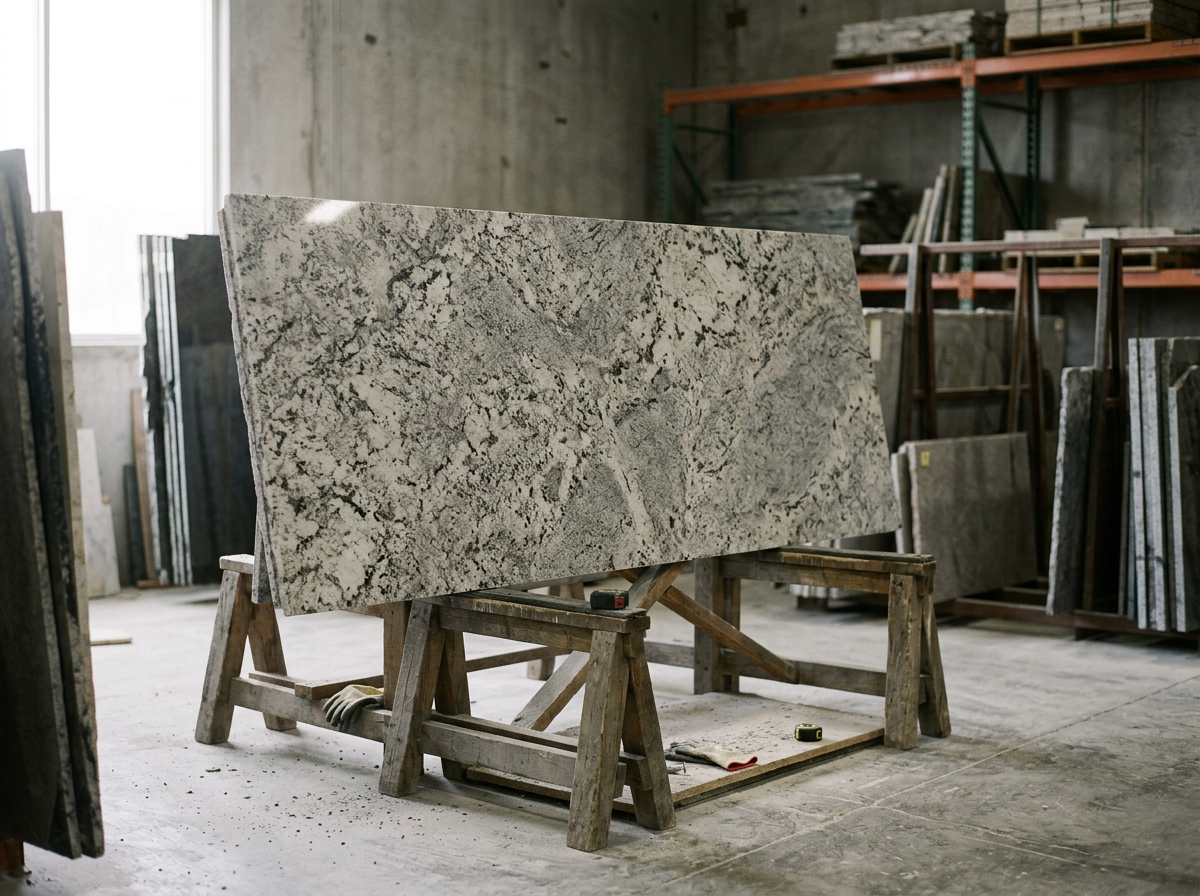
Granite
Granite is known for its durability, weather resilience, and hardness. It may be polished to a high gloss
Uses & Properties
Granite is a common intrusive igneous rock with coarse grains. It is mostly made up of mica, feldspar, and quartz. It is frequently used in construction, monuments, and architectural applications like kitchen countertops and floor tiles because of its strength and visual attractiveness.
-
Heat resistance: pots and pans can be placed directly on the surface without burning, cracking, or melting the stone.
Hard to Scratch: granite is a durable natural material, so normal kitchen knives and daily use will not scratch it.
Outdoor Approved : handles sun, rain, and changing weather well, making it a great choice for outdoor kitchens.
Adds Home Value: buyers prefer natural stone, making granite a solid long-term investment adding resale value.
-
Can Stain: Unsealed or poorly sealed granite quickly absorbs oils, wine, and juice, leading to permanent discoloration.
High Maintenance: yearly sealing to prevent liquids from soaking in and causing stains.
Visible Seams: Large counters or L-shaped layouts require multiple pieces, leaving joints you can see and feel, however our expert team will minimize the feel and visual seem with color match epoxy.
-
Unique Look: Every slab is pulled from the earth with its own pattern and color, no one has a kitchen exactly like yours.
Finishes: Polished (shiny), honed (matte), or flamed (textured).
Maintenance: Seal before and after grouting, then reseal every 1 to 2 years. To clean granite safely, use warm water, mild dish soap, and a soft microfiber cloth daily while avoiding harsh acids like vinegar.